Capacity : 10-20 Tons per hour
Certification: SGS, CE, SONCAP
Supply Ability: 50 sets per month
Delivery period: 10-15 working days
Function : Bucket elevator for loading the grains and beans and pulses and seeds to the cleaner and Destoner and gravity separator
Bucket elevator introduction
Low speed no broken bucket elevator is designed for lifting the grains and beans and sesame and rice to the cleaning machine, When our type elevator working without any broken ,For the broken rate it will ≤0.1%, it will working with high efficient, The capacity it can reach 5-30 tons per hour. It can adjust according our clients requirements.
Most of Agro exporters need to use the bucket elevator for helping lifting the material to the processing machine.
The bucket elevator it is removable, it is very convenient for our clients.
Overall Size

What bucket elevator can do?
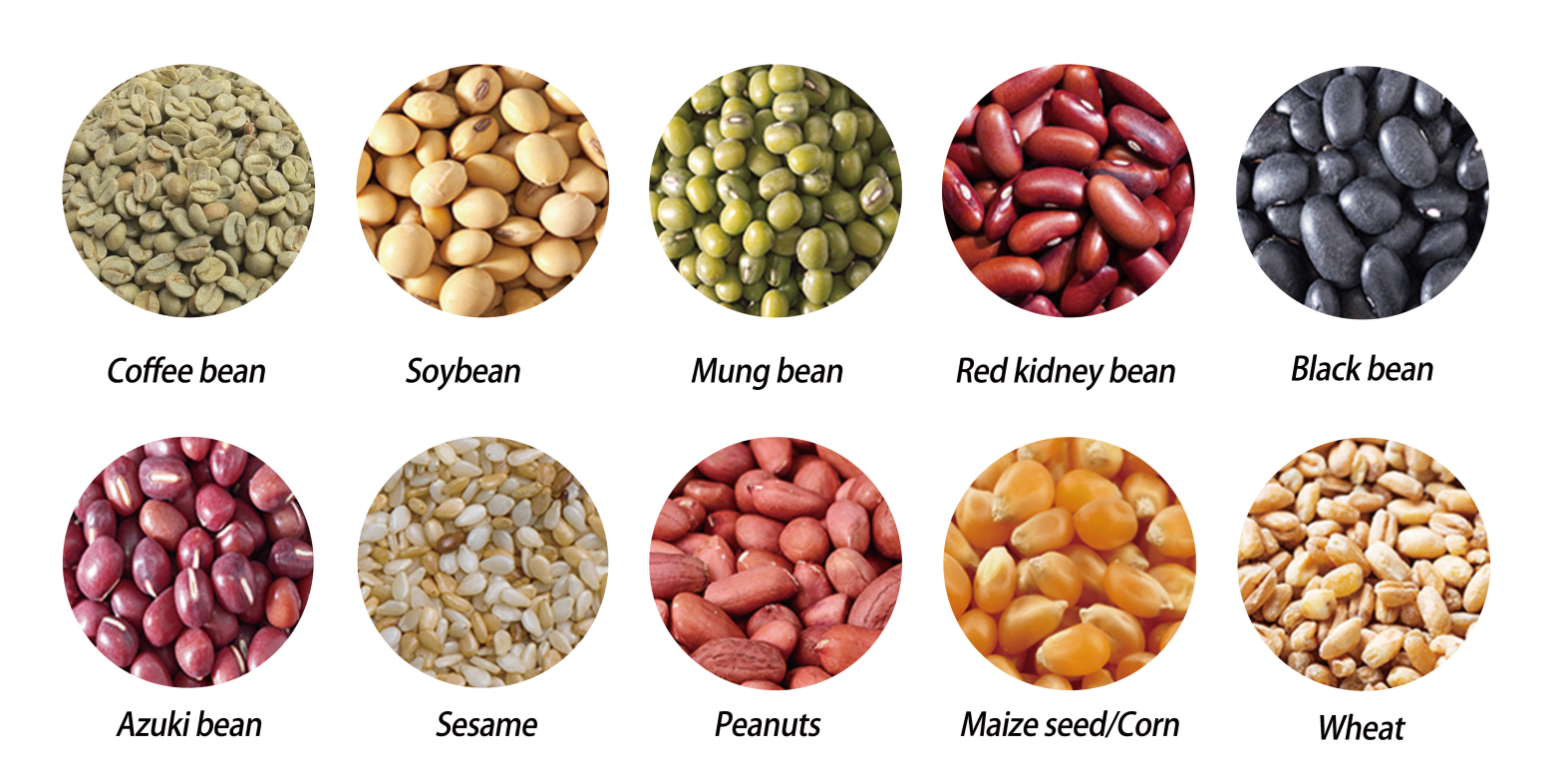
The bucket elevator is an essential conveying equipment for grain and bean processing. It is mainly used for vertical transportation of dry granular bulk grains, and is suitable for the entire process of cleaning, screening, polishing, color sorting, and packaging, and can be adapted to all grain and legume processing factories. It is commonly used for the transportation of crops such as wheat, corn, rice, soybeans, green beans, red beans, kidney beans, chickpeas, sesame, peanuts, chia seeds, etc.
TECHNICAL SPECIFICATION

PRODUCT FEATURES
● Very low speed, low broken rate
● Removable, it is suitable for different Scenes
● The machine runs smoothly and has been operated
● Sand blasting appearance protecting from rusting and water
● The high it is depends on the clients requirements, From 3.5Meter-9Meters
PRODUCT FUNCTION
● The elevator adopts self weight unloading, low line speed, no throwing blanking, to prevent crushing.
● The reducer motor is adopted for direct transmission to realize smooth and ultra-low speed operation without noise and vibration.
● Sanding blasting and plastic spraying surface treatment.
Why choose our elevator?
Our Taobo elevator come in a wide range of specifications. The entire machine is enclosed in a casing, ensuring that no materials leak throughout the process. They have a small footprint, high conveying efficiency, large conveying capacity, uniform and stable material feeding, low material breakage rate, wide conveying range, stable operation, low noise, and support long-term continuous operation. They can be matched with wind screens, sorting machines, density meters, screening machines, color sorting machines, packaging scales and other equipment to increase production capacity, meeting the requirements of continuous production on the assembly line.
lading picture for different clients


Nov. 07, 2026
2026 gravity separator utilizes differences in material specific gravity to perform sorting. It is specifically designed to remove impurities and inferior-quality grains that are similar in size to the target seeds—particles that are otherwise difficult to separate using conventional air-screen or vibrating-screen cleaners. It serves as a core piece of precision-sorting equipment in processing lines for grains, sesame seeds, and legumes.

Nov. 05, 2026
Sesame seeds are extremely small (approximately 1.5–2 mm in diameter) and flat-oval in shape, with a smooth surface, high oil content, and relatively low specific gravity. These physical characteristics present unique challenges for cleaning: while light impurities—such as stalks, husks, dust, and shriveled or empty seeds—can be removed via air classification (aspiration), and oversized or undersized debris can be intercepted through screening, certain contaminants pose a greater difficulty. Specifically, stones, sand, clods of soil, and metal fragments—which are similar in size to sesame seeds but have a significantly higher specific gravity—cannot be effectively separated by either air classification (as they are too heavy to be moved by airflow) or screening (as they pass through or are retained alongside the seeds).

Nov. 05, 2026
Professional Grain Cleaning Gravity Paddy Separator Suppliers

Nov. 04, 2026
Pakistan is a significant global producer and exporter of sesame seeds, ranking as one of the few oilseed crops for which the country maintains a net export position. According to data from Pakistan’s Ministry of National Food Security and Research, the area under sesame cultivation expanded substantially from approximately 259,900 hectares in the 2022/23 crop year to about 399,800 hectares in 2023/24—an increase of 53%. Production reached approximately 301,200 tonnes, a sharp year-on-year rise of 97.7%. For the 2024/25 crop year, production is projected to climb further to approximately 440,000 tonnes (a 44.7% year-on-year increase), with the harvested area—as recorded by FAOSTAT—exceeding 700,000 hectares. The primary production regions are concentrated in Punjab province (cultivated during the *Kharif* monsoon season, covering approximately 1.76 million acres in 2024) and parts of Sindh province. In recent years, technical cooperation between Pakistan and China, alongside the adoption of contract farming, has led to significant improvements in both crop yields and the level of commercialization.

Nov. 02, 2026
Guide to Selecting High Quality gravity paddy separator manufacturers

Nov. 02, 2026
Double Air Screen Cleaner: answers on cleaning, capacity and orders